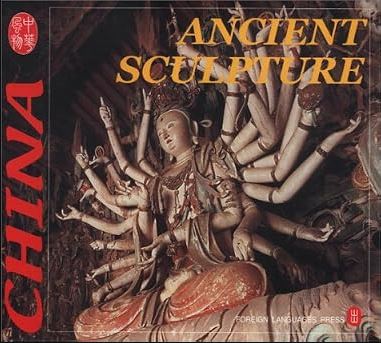
Author : Sun Shuming
ISBN : 7-119-03049-3
Publisher : Foreign Languages Press
Year : 2002
Ancient Sculpture discusses the development of sculpture in ancient Chinese society, particulary pottery sculpture an bronze ware. The appearance of pottery in primitive society not only reflected the economic development of ancient people but also provided an opportunity for artistic and aesthetic expression. During the Xia, Shang, and Zhou dynasties, bronze cooking production developed greatly and showed advanced techniques and artistic skills. One example is the Si Ma Wu Ding, a large bronze cooking vessel decorated with dragon patterns, tigers, and animal heads bronze objects during this period were mainly used as sacrificial the daily utensil. These works demonstrate the gradual development and maturity of artistic skills in ancient Chinese society.
The book also explains that pottery an porcelain products were important forms of early Chinese sculpture. Some pottery sculptures discovered in Lintong County, Shaaxi Probince, including statues of goddesses and fertility symbols, show that primitive sculpture had already reached a considerable artistic level. Bronze ware during the Shang Dynasty had a solemn and mysterious character and was carefully made. The production of large bronze objects required advanced casting techniques and a high level of art, but also provide important evidence of the cultural and technological development of ancient China.
In addition, the bronze objects from the Shang Dynasty were produced in large quantities and had various functions. Many of them were used for religious ceremonies and sacrifices, while others served ans musical instruments,weapons, tools, and daily utensils. The decorations on these objects, such as dragons, tigers, clouds, and animal patterns, show the creativity and imagination of acient Chinese sculpture was closely connected with people’s religious beliefs, daily life, and cultural traditional.
This book also explains Tibetan Buddist sculpture in the Ming and Qing dynasties has its own unique characteridtics.The sculpture ‘’Mountain of 500 Arhats’’ carveds out of purple sandalwood,the Buddist niche carved out of nanmu wood and the Grand Buddha is carved out of white sandalwood in the Yonghe Lamasery in beijing are praised as the ‘’three matchless pieces of wood sculpture. ‘’The Grand Buddha is carved out of a single log of white sandalwood. With 18 m of it above the ground and the other eight meters below ground. The ‘’Mountain of 500 Arhats’’ IS nearly 5 m hight. 3.5 m wide and 30 cm thick. The 500 Arhats, each 10 cm high, are made of gold, silver,bronze iron and tin.
Statues of the Buddha in the tradition of Tibetan Buddhism (also knowen as Lamaism) are mostly made of gilded bronze, but some are made of gold or silver. In the collections of artistic works in the palace Museum, there are many precious pieces, such as the standing statue of maintreya and the seated statue of Sakyamuni (the founder of buddhism), both made of pure gold. The seated statue of Sakyamuni is 45 cm tall; together with the halo and the lotus-throne pedestal, the statue is 90.5 cm high in total. With his right sholder exposed Sakyamuni is rolating the ‘’weel of the law’’ (an emblem of the power of the buddhist doctrine, which crushes all delusion and superstition just as a wheel trast with the splendor of the halo and lotus throne.
By Christina